The Supplements

A personal recovery chapter about the supplements I used during my recovery from chronic gastritis — what helped, what surprised me, and what came with side effects.

Chapter Six
Sea Buckthorn - Brand Name Oliovita
Start of the Journey
110 lb Start Weight
Where I Ended Up
125 lb End Weight +15 lb Total Gain

The science behind the supplement

How Sea Buckthorn Supports the Gastric Mucus Lining

Sea buckthorn has been studied for possible effects on the stomach’s protective lining. Some experiments found less damage or faster healing, but they used different preparations: seed oil, pulp oil, or concentrated compounds from the fruit, bark and leaves. The useful question is what each preparation actually did, and whether those results tell us anything about people with gastritis. These seven cards work through that question.

Sea buckthorn plant with orange berries and botanical context
1

What Sea Buckthorn Is

The plant · its different preparations · traditional uses

Sea buckthorn is a thorny shrub with silvery leaves and bright orange berries. Its scientific name is Hippophae rhamnoides. It grows across parts of Europe and Asia, including cold and mountainous regions. The berries contain both a fleshy outer part, called the pulp, and seeds.

One plant can give us different products. Oil can be taken from the seeds or from the berry pulp, and the two oils contain different mixtures of fats. Researchers also make extracts from the fruit, leaves or bark. An extract pulls out and concentrates selected plant compounds. That is why a study of bark extract cannot automatically tell us what a berry-oil capsule will do.

Its traditional use goes back a long way. Sea buckthorn has been used in Asian medical traditions for digestive complaints and other problems. This history helps explain why researchers became interested in it. Traditional use gives us a reason to investigate a plant; it does not, by itself, establish that a particular product heals gastritis.

Modern research tests specific preparations. Scientists have studied sea buckthorn oils and extracts for effects on injured tissue, inflammation and protective linings. Some work uses cells grown in a laboratory, some uses animals, and some involves people. These are different stages of research, and each answers a different kind of question.

The stomach connection is its protective lining. The moist inner lining of the stomach is called the gastric mucosa. Other organs, including the mouth and vagina, also have moist linings. Findings in those tissues can raise useful questions about sea buckthorn, but each tissue works differently. Stomach benefits need stomach-specific evidence.

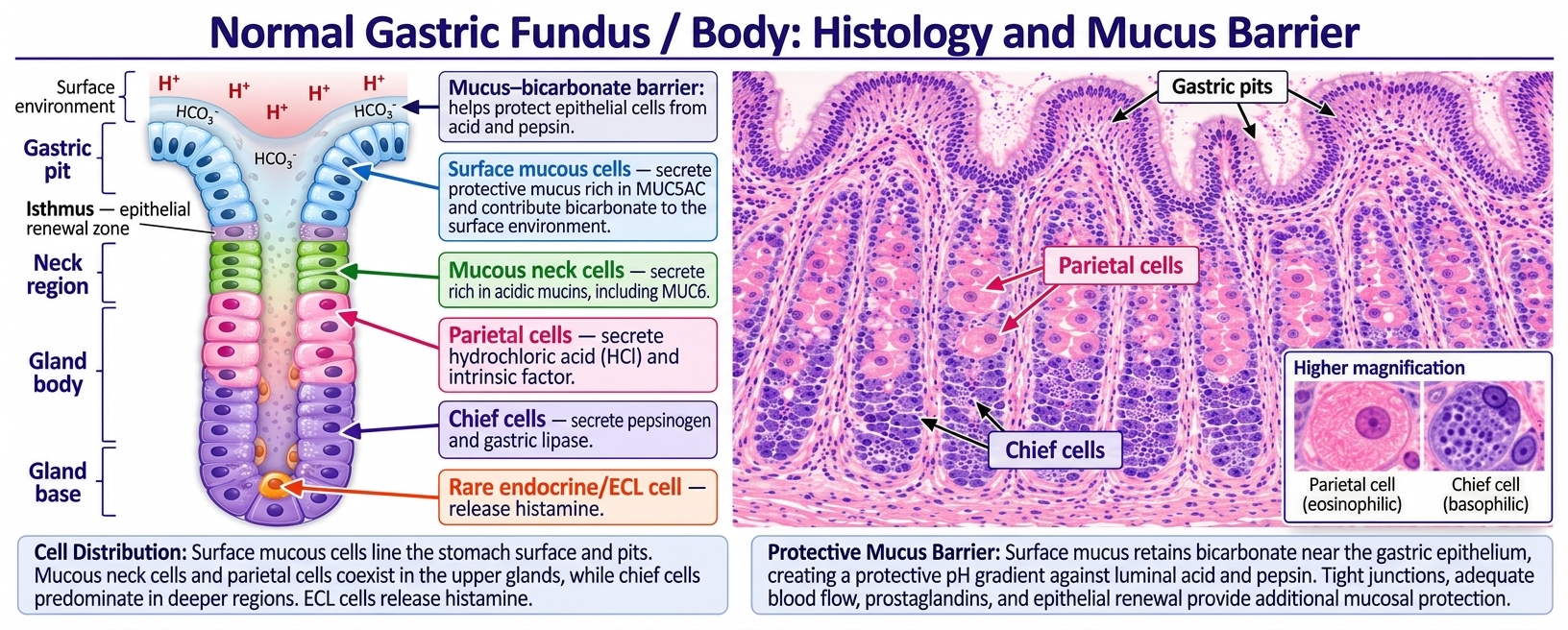
Educational diagram of normal stomach fundus and body showing gastric pits, surface mucous cells, mucous neck cells, parietal cells, chief cells, and an ECL cell
2

The Gastric Mucus Barrier

Protective mucus · acid neutralization · ongoing repair

Your stomach needs acid and digestive enzymes to break down food, yet its own living tissue usually stays protected. A thin layer of mucus covers the surface, while cells underneath help neutralize acid and keep the lining in good condition. This protection depends on several parts working together.

The mucus is a protective gel. Surface cells release large molecules made from protein with attached sugars. These molecules, called mucins, link together and hold water, forming the sticky gel we call mucus. This gel helps keep the protein-digesting enzyme pepsin away from the cells beneath it and holds acid-neutralizing substances close to the surface.

The cells keep their immediate surroundings less acidic. The lining releases bicarbonate, a substance that neutralizes acid, into the mucus. This allows the main stomach contents to remain strongly acidic while the area right next to the cells stays much less acidic. The mucus and bicarbonate work together; mucus alone is not an impenetrable wall against acid.

Chemical messages help maintain these defenses. The stomach makes local signals called prostaglandins. One of them, PGE2, helps support mucus production, bicarbonate release, blood flow and repair. Painkillers such as ibuprofen belong to a group called NSAIDs, short for nonsteroidal anti-inflammatory drugs. They can reduce these protective signals, which is one reason they can injure the stomach.

The lining needs supplies and replacement cells. Blood brings oxygen and nutrients that the tissue needs to stay alive and repair damage. The surface also replaces worn or injured cells. These surface-covering cells are called epithelial cells. Maintaining protection means continually supplying them, repairing small injuries and replacing cells when needed.

Different problems can damage or inflame the lining. The bacterium Helicobacter pylori can cause stomach inflammation. The immune system can also attack the stomach’s own tissue, a condition called autoimmune gastritis. NSAIDs, alcohol and bile flowing back into the stomach can damage the lining too. The term stress gastritis usually refers to severe physical stress during critical illness, not everyday worry. The cause matters because different problems need different treatment.

Reducing acid did not resolve my gastritis. PPIs reduce acid production, but that did not resolve the problem in my case. After more than a year of repeated treatment, I had a second endoscopy in February 2023. The biopsy report that followed still diagnosed chronic superficial gastritis. That is why I do not describe acid suppression as what healed my stomach lining.

Sea buckthorn oil composition with pulp oil, seed oil, and bioactive compounds
3

What's Inside the Oil

Seed oil · pulp oil · protective plant compounds

Fats are made from smaller components called fatty acids. Sea buckthorn seed oil and pulp oil contain different mixtures of these components, even though they come from the same berry. Knowing which oil a study used matters, because the words sea buckthorn oil do not describe one identical product.

Seed oil contains fats we need from food. Two important seed-oil fats are linoleic acid, an omega-6 fat, and alpha-linolenic acid, an omega-3 fat. They are called essential because the body cannot make them and must obtain them from food. They contribute to normal cell structure and function. Their proportions vary, so there is no single fixed ratio shared by every seed oil.

Pulp oil usually contains much more omega-7. The berry’s fleshy part and peel contain oil rich in a fat called palmitoleic acid, a member of the omega-7 family. One composition study measured roughly 12–39% palmitoleic acid in pulp-and-peel oil, while finding very little in seed oil. Those percentages describe the oil’s fatty-acid mixture, not the weight of the whole berry. The amount depends on the plant and the preparation.

The orange color comes from plant pigments. Sea buckthorn pulp oil contains pigments called carotenoids, including beta-carotene. Oils can also contain vitamin E compounds. Some of these substances act as antioxidants: they help limit certain damaging chemical reactions involving oxygen. Fats can undergo these reactions, called oxidation, which can change or damage them. Antioxidant content is a composition finding, not proof that an oil repairs a person’s stomach.

Oil does not contain everything in the berry. Vitamin C dissolves in water, so the berry’s vitamin C content does not tell us how much is present in its oil. Other plant substances also appear in different amounts depending on extraction. These include flavonoids, a group of plant compounds, and fat-like plant substances called sterols. Whole berries, juice, oils and concentrated extracts each provide a different mixture.

Omega-7 palmitoleic acid as the star compound in sea buckthorn
4

Omega-7: The Star Fatty Acid

A fat the body can make · cell structure · research findings

Omega-7 is the name of a family of fats. The one most often discussed in sea buckthorn pulp oil is palmitoleic acid. Researchers are interested in it because it can be part of cell fats and, in some experiments, influence messages between tissues. These roles help explain the interest without making it a proven stomach treatment.

Your body can make it. An enzyme, a protein that helps a chemical reaction happen, called SCD1 helps the body produce palmitoleic acid. This occurs in tissues including the liver and stored body fat. Unlike the essential omega-3 and omega-6 fats described earlier, palmitoleic acid does not have to come from food. A damaged stomach lining does not automatically mean that you need more of it.

A fat can also carry a message. In a 2008 mouse study, researchers found that palmitoleic acid helped fat tissue communicate with the liver and muscles. They called it a lipokine, meaning a fat that acts as a chemical messenger. It affected how muscles responded to insulin, a hormone that helps control blood sugar, and how the liver handled fat. That experiment studied metabolism, not the healing of gastritis.

Cell boundaries contain fats. Every cell has a thin boundary called a membrane. Much of its structure comes from fat-based molecules called phospholipids, which form a flexible layer around the cell. Fatty acids such as palmitoleic acid can be part of these molecules. This explains a general role for fats in tissue structure, but does not show that extra omega-7 makes stomach cells renew faster.

Laboratory tests suggest effects on inflammation. Researchers have tested palmitoleic acid in immune cells called macrophages, which help respond to infection and injury. Under certain laboratory conditions, it reduced some inflammation-related messages, called cytokines. It also reduced activity in NF-kB, a system inside cells that helps switch on inflammation-related genes, the instructions cells use to make proteins. These are clues about how the fat might act, rather than results from people taking oil for gastritis.

The whole oil still needs to be considered. Sea buckthorn oil contains several fats and other compounds, so an effect from the oil cannot simply be assigned to omega-7. Seed oil, which contains very little palmitoleic acid, has also produced positive results in animal ulcer studies. To find out which ingredient caused a benefit, researchers would need experiments designed to separate those ingredients.

Sea buckthorn mechanisms supporting gastric mucosal repair
5

How It Supports Mucosal Repair

Possible protection · cell renewal · inflammation

Repairing the stomach lining involves protecting the surface, replacing injured cells and dealing with the cause of inflammation. Sea buckthorn research touches on several of these processes. The important distinction is between an effect researchers actually measured and an explanation they think might account for it.

The quality of the protective surface may matter. Older research discussions proposed that sea buckthorn oil could affect how the stomach’s surface resists digestive fluids. One term used is hydrophobicity, meaning how strongly a surface repels water. This is an idea about surface protection, not evidence that swallowed oil forms a permanent coating. The studies discussed here do not establish that capsules thicken or waterproof the mucus layer in people.

Compounds from sea buckthorn bark have been studied for cell renewal. In rats with stomach ulcers, researchers tested concentrated compounds extracted from the bark of the sea buckthorn shrub, called procyanidins. Ulcers became smaller, and measurements associated with repair increased. These included EGF, a growth signal; EGFR, the cell’s receiver for that signal; and PCNA, a protein involved in copying a cell’s genetic instructions as it multiplies. This suggests effects on repair in that experiment. It was bark extract, rather than a berry-oil capsule.

Some extracts reduced inflammation-related signals. A 2025 study tested compounds extracted from sea buckthorn fruit, called flavonoids, in laboratory experiments and in mice infected with H. pylori. The researchers reported less stomach inflammation in the mice. Separate work with a water-based extract of sea buckthorn fruit studied immune cells and a laboratory model of the intestinal lining. These findings concern the particular extracts and models tested; they cannot automatically be transferred to ordinary sea buckthorn oil.

Researchers have also tested effects on H. pylori. The sea buckthorn fruit flavonoids tested in that 2025 study interfered with this bacterium in laboratory tests. They affected its outer membrane, which helps keep its contents inside, and reduced the activity of urease, an enzyme it uses to survive stomach acid. This is early research into bacterial activity. It does not establish that sea buckthorn capsules clear an infection or improve antibiotic treatment in people.

Animal studies have measured stomach damage and healing. Some experiments found fewer or smaller stomach injuries after sea buckthorn preparations, while others found faster healing of ulcers already present. An ulcer is an open sore in the lining. Researchers sometimes report an ulcer index, a score used to summarize the amount of damage. Protection before an injury and healing after an injury answer different questions, and results depend on the preparation and experiment.

Other moist linings offer a separate line of research. Human studies have examined sea buckthorn oil that participants swallowed for dry eyes and for changes in the vaginal lining after menopause. The 2010 dry-eye trial found a smaller cold-season increase in tear concentration. A separate 2014 trial found improvement in vaginal surface-lining integrity, meaning how intact that surface remained, although not all measures clearly improved. These findings concern the eyes and vagina. They do not show that the oil rebuilds the stomach’s mucus fats. Similarities between tissues give researchers questions to test, rather than a confirmed explanation of stomach healing.

Research studies on sea buckthorn and gastric mucosal support
6

The Studies, Examined

Animal experiments · limited stomach trials · other tissues

The easiest way to read this research is to ask three questions: what preparation was used, who or what was tested, and what actually changed? Laboratory and animal studies help researchers investigate possible effects. Trials in people are needed to find out whether a preparation helps a particular condition in everyday use.

Xing and colleagues, 2002: seed and pulp oils in rats. The sea buckthorn seed and pulp oils were extracted using carbon dioxide and tested in several ways of producing stomach ulcers. The experiments included water-immersion stress, a drug called reserpine, and tying off the stomach outlet so its contents could not pass normally. Both oils reduced damage in these models and accelerated healing of ulcers made with acetic acid. This provides direct animal evidence about oils, but it does not identify omega-7 as the reason for the results.

Suleyman and colleagues, 2001: fruit extract before alcohol injury. Rats received an extract of sea buckthorn fruit made using hexane, a liquid used to separate compounds from the fruit, before alcohol was given to injure the stomach. They developed less damage, and levels of glutathione, one of the body’s own antioxidant defenses, were better preserved. The experiment also compared the extract with melatonin and the acid-reducing medicine omeprazole. It tested protection before a short-term injury, rather than treatment of long-standing human gastritis.

Dogra and colleagues, 2013: seed oil in a small dog study. Twenty dogs with ulcers caused by the steroid medicine dexamethasone were divided into five groups, with four dogs per treatment. Researchers compared sea buckthorn seed oil with four ulcer medicines. Healing was checked using a camera inside the stomach, a procedure called endoscopy. The oil group had the shortest average healing time. With so few animals, this result cannot establish that the oil works better than these medicines in people.

Xu and colleagues, 2007: bark extract and repair measurements. Rats with ulcers made using acetic acid received procyanidins extracted from sea buckthorn bark. Researchers found smaller ulcers and increases in the growth signal EGF, its receiver EGFR, and the cell-multiplication marker PCNA. These measurements add information about repair processes. The preparation matters: concentrated bark compounds are different from the seed or pulp oil used in other experiments.

Older reports in people leave unanswered questions. A published review describes earlier reports of sea buckthorn oil being used in people with stomach or duodenal ulcers; the duodenum is the first part of the small intestine. Those reports describe improvement, but the review alone does not provide enough detail to judge the original studies confidently. Their reported success rates should not be treated as a reliable prediction for someone with gastritis today.

Chen and colleagues, 2026: leaf extract and H. pylori. Researchers tested an extract of sea buckthorn leaves rich in polyphenols, a broad group of plant compounds that includes flavonoids. In laboratory tests, it made H. pylori less able to move and reduced urease activity. In infected mice, it also reduced signals linked to stomach inflammation and showed protective effects on the lining. This adds stomach-related evidence about sea buckthorn leaves. It does not tell us whether berry-oil capsules have the same effects in people.

Human trials in other tissues answer different questions. Larmo’s 2010 dry-eye trial found a smaller cold-season rise in tear concentration. More concentrated tears contain more dissolved particles relative to water. A separate 2014 trial in women after menopause found improvement in the integrity of the vaginal surface lining, meaning how intact that surface remained, although not all measures clearly improved. Both trials tested sea buckthorn oil swallowed by participants, but neither studied gastritis or demonstrated rebuilding of the stomach’s mucus barrier.

Natural dietary sources of omega-7 including sea buckthorn and macadamia
7

Other Natural Sources of Omega-7

Macadamia · fish · differences between sources

Sea buckthorn is one source of palmitoleic acid, but it is not the only one. Certain nuts, fish and other foods contain it too. Comparing these sources tells us where the fat occurs and in what amounts. It does not tell us which food or oil heals a stomach lining.

Macadamia nuts are another plant source. Macadamia nuts and their oil contain appreciable palmitoleic acid. A percentage listed in research usually refers to its share of the total fatty acids in the oil, rather than its share of a whole nut. The amount varies, so one quoted figure should not be treated as a fixed value for every product.

Fish contain mixtures of fats. Some fish oils also contain palmitoleic acid alongside other fatty acids. Its amount depends on the fish and how the oil is processed. Ordinary fish oil and a product specially concentrated for omega-7 can have very different compositions, even when both come from fish.

Other foods can contain different amounts and forms. Avocado oil and animal fats can contribute palmitoleic acid too; calling them all trace sources is too broad. Dairy fat also contains a differently shaped form called trans-palmitoleic acid. The form commonly discussed in sea buckthorn is called cis-palmitoleic acid. Cis and trans describe the molecule’s shape, so findings about one form should not automatically be applied to the other.

Composition is only one part of the picture. Pulp oil can combine palmitoleic acid with pigments and vitamin E compounds, while seed oil provides a different mixture. This makes sea buckthorn interesting to study. But more omega-7 does not automatically mean more stomach protection, and a long ingredient list does not prove better healing. The meaningful question remains whether the particular preparation has been tested for the benefit being claimed.

The product itself: Oliovita

Where to find it

Official website: vitaeinternational.com

Price

60 softgel capsules — €30
120 softgel capsules — €50

Prices can change, so verify on the official website.

Dose

One capsule with each meal.

Honesty

Not sponsored — I’m sharing it because it helped me.

Oliovita sea buckthorn oil softgel capsule box

Final Thoughts on Oliovita

  1. i

    As you saw in the pictures, my overall health improved significantly. I gained over 15 pounds, felt much more energetic, and became more optimistic. Most importantly, the burning and pain in my stomach subsided drastically.

  2. ii

    As for why I was taking photos of myself in that condition—honestly, I don’t know. I wasn’t actively trying to document my improvement while taking the supplement; I was just taking pictures as I normally did, even before losing so much weight. I simply ask that you don’t make fun of me too much.

  3. iii

    What I appreciate about this product is its unique extraction process from the fruit of the sea buckthorn shrub. It is 100% natural, completely free of chemical contaminants, and it gave me zero side effects.

The next supplement.

  1. iv

    Unfortunately, when it comes to not having side effects, the same cannot be said for the next supplement. While it is incredibly effective at supporting the stomach’s mucosal lining (perhaps even stronger than sea buckthorn, hard to believe after seeing those photos), its immediate and long-term side effects will make you think twice before trying it. I am not trying to scare anyone; I just want to remain as honest as I have been throughout this story. Discretion is advised.

Chapter Seven
Vitamin A as Softgel Capsules

The science behind Vitamin A

How Vitamin A Supports the Gastric Mucus Lining

Vitamin A helps the body maintain lining cells and organize immune responses. Here I’ll explain what that means for the stomach, starting with the different forms of the vitamin and then looking at the research. Some findings come from human stomach tissue; others come from cells, animals or different organs. Those differences matter when we ask what the research tells us about gastritis.

Vitamin A overview illustration with retinoid signaling and stomach lining support
1

What Vitamin A Does

Everyday functions · fat absorption · liver storage

Vitamin A helps us see, supports the immune system and helps the cells covering our skin and internal organs do their jobs. Researchers worked out these roles over many years. In 1913, experiments showed that certain foods contained a small amount of something needed for normal growth. That substance later became known as vitamin A.

Vitamin A is called fat-soluble because it dissolves in fat. During digestion, it is absorbed mainly in the small intestine with help from the processes that handle dietary fat. Unlike a nutrient that the body quickly gets rid of, vitamin A can be stored and used later.

The liver holds most of that stored vitamin A and releases it as the body needs it. Some comes from animal foods in forms the body can use as vitamin A. Some comes from plant pigments that the body first has to convert. These different forms are explained in the next cards.

The connection to the stomach is the health of its lining cells. These cells have to keep doing their normal jobs while worn or damaged cells are replaced. The body turns some vitamin A into retinoic acid, a substance that helps cells respond to instructions about growth and function. That gives us a reason to study vitamin A in the stomach; it does not mean that taking extra vitamin A automatically heals gastritis.

Educational diagram of normal stomach fundus and body showing gastric pits, surface mucous cells, mucous neck cells, parietal cells, chief cells, and an ECL cell
2

The Stomach’s Protective Lining

Protective mucus · acid control · lining cells

Your stomach makes acid to help digest food, but its own surface needs protection from that acid. Mucus forms a wet gel over the lining. Large proteins called mucins help the gel hold water. Mixed into it is bicarbonate, a substance that neutralizes acid close to the cells. Underneath sits a closely joined sheet of lining cells, called epithelial cells. Their connections help keep stomach contents out of the tissue below, while blood brings oxygen and nutrients needed for maintenance and repair.

Gastritis means inflammation of the stomach lining: an immune response involving changes in the tissue and the activity of immune cells. It does not always mean that the mucus has disappeared or that an ulcer has formed. One common cause is infection with Helicobacter pylori, usually shortened to H. pylori. Another is the immune system mistakenly attacking the stomach’s own cells. Medicines such as ibuprofen can also damage the lining, sometimes with relatively little inflammation; that kind of damage is called gastropathy.

Healing depends on what caused the problem and how much damage there is. Medicines that reduce acid can give injured tissue a better chance to heal, while treatment also addresses causes such as H. pylori. Vitamin A belongs in this discussion because lining cells use it to make retinoic acid, a substance involved in communication between cells. Nutrition helps the body maintain its tissues, but neither vitamin A nor sea buckthorn oil has been shown to supply everything needed to repair every case of gastritis.

Different forms of vitamin A including retinol, carotenoids, and retinoic acid
3

Different Forms of Vitamin A

Retinol · plant pigments · retinoic acid

When a food label or a study says vitamin A, it helps to check which form it means. Vitamin A is a group of related substances. The form in a carrot, the form stored in the liver and the form used for certain signals inside a cell are not all the same.

Retinol is one form of vitamin A found in animal foods. Liver, eggs, dairy products and some fish can provide it, although amounts vary. It is called preformed vitamin A because the body does not have to make it from a plant pigment first. It can still need further changes before it does a particular job, such as helping vision or supplying a signal inside a cell.

Retinyl esters are forms in which retinol is joined to another molecule, usually a fatty acid. This makes a form suited to storage. The body can separate that attachment to release retinol. Retinyl palmitate and retinyl acetate are names you may see on supplement labels. They are forms of preformed vitamin A, rather than beta-carotene or ready-made retinoic acid.

Beta-carotene is a pigment that gives foods such as carrots and sweet potatoes their orange color. It is also found in dark-green vegetables, where the green pigment hides its color. Beta-carotene belongs to a larger group of plant pigments called carotenoids. The body can turn some carotenoids into vitamin A, which is why they are called provitamin A: they can provide the starting material.

The conversion happens in steps. The body first splits beta-carotene to make retinal. Retinal can then become retinol, or it can be changed into retinoic acid. Retinol can also be changed to retinal. Retinal is involved in vision, while retinoic acid helps control how certain cells grow and work. Similar names can make this confusing, but each substance has its own place in the process.

People differ in how efficiently they use beta-carotene. An enzyme—a protein that helps a chemical change happen—carries out the first conversion step. In a study published in 2012, Lietz and colleagues found that small differences in the gene for this enzyme affected conversion in female volunteers. Food preparation, absorption and a person’s vitamin A status also matter. These differences do not establish that people with gastritis generally cannot use beta-carotene properly.

Retinoic acid is the form involved in many of the cell-signaling experiments discussed here. One version, all-trans retinoic acid, is often shortened to ATRA. It is also used as a prescription medicine for a particular type of leukemia. Adding retinoic acid directly to cells in a laboratory is different from eating food containing vitamin A or taking a retinol supplement. Findings from one form should not be treated as proof that every other form will produce the same result.

Retinoid receptors acting as docking stations for vitamin A in gastric cells
4

How Cells Use Vitamin A Signals

Cell instructions · signal receivers · stomach research

Cells need instructions about what to make and how to work. Some of those instructions come from DNA, the material that holds the body’s genetic information. A gene is a section of DNA with instructions for making a particular product, often a protein. Proteins do many jobs, from giving a cell structure to helping it receive messages.

Most of a cell’s DNA is kept in a compartment called the nucleus. Retinoic acid, a substance the body makes from vitamin A, can affect how certain genes are used there. This is called gene expression. In everyday terms, it changes how much of a gene’s product the cell makes; it does not rewrite the DNA itself.

Retinoic acid works through proteins called receptors. A receptor recognizes a particular substance and helps the cell respond to it. Two related groups involved in vitamin A signaling are retinoic acid receptors, shortened to RAR, and retinoid X receptors, shortened to RXR. Each group has three versions. Alpha, beta and gamma are simply names used to tell those versions apart:

  • Retinoic acid receptors: RAR-alpha, RAR-beta and RAR-gamma.
  • Retinoid X receptors: RXR-alpha, RXR-beta and RXR-gamma.

An RAR usually works with an RXR as a pair. All-trans retinoic acid binds to the RAR part. The pair can bind to particular places on the DNA and affect nearby genes. The receptors are not carrying retinoic acid to the DNA like a delivery service; they are part of the system that connects a chemical signal to the use of genetic instructions.

The result depends on the cell receiving the signal and the other messages around it. A stomach cell and an immune cell have different jobs, so they do not necessarily respond in the same way. Having a receptor shows that a cell has part of the machinery for a response. It does not tell us that more vitamin A will always be helpful.

In 1999, Jiang and colleagues examined samples of human stomach tissue. They looked for messenger RNA, or mRNA: temporary copies of genetic instructions used to make proteins. They found messages for five receptor versions—RAR-alpha, RAR-beta, RAR-gamma, RXR-alpha and RXR-beta—in most cell types in normal stomach lining. The study examined tissue rather than giving vitamin A to people with gastritis.

The researchers also found less RAR-alpha mRNA in tissue with certain abnormal changes. One was intestinal metaplasia, where some stomach cells take on features of intestinal cells. Another was dysplasia, where cells look and develop abnormally. Neither term means that cancer is certain. The study found a difference between tissue samples; it did not prove that a shortage of vitamin A caused those changes or that supplements would reverse them.

These findings help explain why researchers study retinoic acid in the stomach: the lining contains the receptors associated with its signals. They do not establish a treatment. Finding the messages used to make a receptor is different from measuring how well the whole signaling process works, and different again from showing that a person’s symptoms or stomach damage improve.

In 2015, Bimczok and colleagues studied human stomach lining cells and found that they could turn retinol into retinoic acid. They used enzymes, proteins that help chemical changes happen, to carry out the conversion. In laboratory experiments, the lining cells also increased the ability of immune cells grown alongside them to make retinoic acid. The stomach cells were using vitamin A supplied to them, rather than making vitamin A from nothing.

The same research found changes in this retinoic-acid-making system in stomach tissue infected with H. pylori. That suggests the infection can interfere with local cell communication. It does not show that taking a vitamin A capsule restores the system, removes the infection or heals gastritis. The finding is about how human stomach cells work and how infection may disturb that process.

Th17 fire-starter cells and Treg peacekeeper cells in immune balance
5

Th17 and Treg Cells

Immune responses · controlling inflammation · study limits

When the stomach is inflamed, immune cells are part of what is happening. Their job is to deal with threats and damage, but their response also needs limits. A response that is too weak may leave an infection in place. A response that continues too strongly can damage the body’s own tissue.

T cells are one family of immune cells. Different kinds help organize a response, attack infected cells or limit other immune activity. A naive T cell is a mature cell that has not yet met the particular target it recognizes. Signals around it help shape what role it takes on when it becomes active.

One group is called Th17 cells. These cells help the body respond to certain bacteria and fungi, especially around surfaces such as the intestinal lining. They can be useful during infection. In some conditions, though, continued Th17 activity contributes to inflammation and tissue damage. Their name is not a label for a cell that is always harmful.

Immune cells communicate by releasing small proteins called cytokines. Th17 cells are known for making a cytokine called interleukin-17, usually written as IL-17. It helps call other defenses into action. Some Th17 cells also make IL-22, which can affect the health and defenses of lining cells. What these messages do depends on the tissue, the infection and the other signals present.

Another group is called regulatory T cells, or Treg cells. They help limit immune responses and reduce the chance of attacks on the body’s own tissues or harmless material. This ability to avoid unnecessary attacks is called immune tolerance. Treg cells can act through contact with other cells and through chemical messages that change how those cells respond.

Many Treg cells contain a protein called Foxp3. Foxp3 helps control genes, the instructions a cell uses to make products such as proteins. In Treg cells, some of those products support the job of regulating immune responses. This is why researchers measure Foxp3 when studying these cells. Measuring it alone does not tell us how well a person’s immune response is controlled or whether their stomach is healing.

More immune suppression is not always better. Limiting an excessive response can protect tissue, but suppressing a response too much can make an infection harder to clear. In the stomach, H. pylori can remain despite an ongoing immune response. The useful question is how the whole response behaves, rather than whether one cell group can always be increased or another always reduced.

In 2007, Mucida and colleagues studied retinoic acid, the signaling substance made from vitamin A, in experiments involving mouse T cells and intestinal immune cells. Under the conditions they tested, it encouraged the development of Treg cells and reduced the development of Th17 cells. A message called TGF-beta helped shape this response. TGF-beta is a protein that affects cell growth and immune behavior, and its effects depend on the other signals around it.

In 2008, Xiao and colleagues looked more closely at that process. In cell experiments, retinoic acid strengthened part of the response to TGF-beta and increased Foxp3. It also reduced the amounts of receptors for IL-6 and IL-23, messages that help support Th17 development or activity. Receptors are the proteins cells use to receive those messages. But in the researchers’ mouse model of ongoing autoimmune inflammation, retinoic acid did not increase the proportion of Treg cells. The laboratory result did not apply in every setting.

Elias and colleagues also reported experiments in 2008 using all-trans retinoic acid and substances that activate or block vitamin A receptors. Activating the RAR-alpha receptor favored Foxp3 production and reduced Th17 development under the tested conditions; blocking retinoic acid signaling reduced the Foxp3 response to TGF-beta. These were experiments about how T cells develop. They were not trials showing that a vitamin A supplement treats an inflamed stomach.

A different kind of evidence came from Lounder and colleagues in 2017. They followed 114 children after donor stem-cell transplants, which replace the cells that produce blood and immune cells. Lower blood vitamin A levels 30 days after transplant were associated with more later graft-versus-host disease, including disease involving the gut. In this condition, immune cells from the donor attack the recipient’s tissues. This was an association, not a trial of vitamin A treatment, and it concerned transplant patients rather than people with ordinary gastritis.

For gastritis, the cause still matters. H. pylori is a bacterial infection. Autoimmune gastritis involves the immune system attacking the stomach’s own cells. Learning how retinoic acid affects T cells helps researchers ask questions about these conditions, but the studies above do not show that vitamin A clears H. pylori, improves antibiotic treatment or treats autoimmune gastritis.

What I take from this research is that vitamin A participates in the way immune responses are organized. That supports its place in normal nutrition. It does not give us a formula in which more vitamin A means more Treg cells, less inflammation and a healed stomach. The form used, the tissue being studied and the other immune signals all matter.

IgA antibodies acting as security guards in the gastric mucus layer
6

IgA Antibodies

Antibodies in mucus · B cells · intestinal research

Antibodies are proteins made by the immune system that recognize particular targets, such as parts of a bacterium. There are several kinds. One is immunoglobulin A, usually called IgA. A form released onto moist body surfaces, called secretory IgA, is found in places such as the digestive tract and airways. These surfaces are often called mucous membranes because they have a lining kept moist by secretions.

IgA can bind to microbes and their products, help gather them together and limit their contact with lining cells. This gives the body a way to handle some threats at the surface. It does not make the surface sterile or guarantee that every infection will be stopped. Having IgA in stomach secretions does not, by itself, mean H. pylori cannot remain there.

B cells are immune cells that can develop into cells that release antibodies. They can also change the kind of antibody they make while keeping the same target. That change is called class switching. In a 2013 study, Seo and colleagues found that retinoic acid encouraged switching toward IgA in cell experiments and affected intestinal IgA production in mice. Combining it with TGF-beta, another protein message that changes cell behavior, strengthened several parts of the response. This was laboratory and mouse research, rather than a study of human stomach healing.

In 2006, Mora and colleagues studied intestinal dendritic cells, immune cells that collect information about nearby material and help organize other immune cells. Retinoic acid helped B cells acquire the ability to travel to the intestine, a process called gut homing. In those experiments, retinoic acid alone did not make the cells release IgA; other messages from the dendritic cells were also needed. Mice lacking vitamin A had far fewer IgA-releasing cells in the small intestine. The study shows why both the nutrient supply and the surrounding signals matter.

Yang and colleagues examined vitamin A deficiency in a rat study published in 2011. Rats receiving a diet without vitamin A were compared with rats receiving vitamin A, and some were infected with Salmonella, a bacterium that can cause intestinal illness. The deficient animals had lower secretory IgA and more intestinal damage after infection. This was a study of deficiency and intestinal infection in rats, not H. pylori infection in the human stomach.

Together, these studies connect vitamin A and retinoic acid with some of the steps involved in intestinal IgA defenses. They do not establish how much IgA a person with gastritis will make after taking a supplement. They also do not show that vitamin A prevents H. pylori from attaching to stomach cells or protects against reinfection. Those would need to be tested directly in people.

Vitamin A supporting epithelial repair and stomach lining regeneration
7

Repairing the Lining

Replacement cells · tissue repair · stomach findings

The stomach lining is living tissue, so maintaining it includes replacing cells. Its surface cells are called epithelial cells. New cells come from cells able to divide, including stem cells in the stomach’s glands. Stem cells can help maintain their own supply and produce cells that develop into more specialized types, such as mucus-producing cells. This development is called differentiation. Different parts of the lining renew at different speeds; the whole stomach lining is not replaced every three to five days.

Some early vitamin A research concerned skin wounds. In 1969, Hunt and colleagues reported that vitamin A treatment could counter the slowing of open-wound healing caused by cortisone, a steroid medicine. Their paper included animal experiments and human wound observations. That helped establish interest in vitamin A and tissue repair, but it concerned skin wounds under particular treatment conditions. It did not test retinoic acid as a treatment for gastritis or show that an ordinary vitamin A supplement repairs the stomach.

In 1984, Levenson and colleagues studied rats exposed to whole-body radiation, which can injure tissues and interfere with healing. The rats received additional vitamin A in their diet before or after the radiation. The researchers reported less impairment of skin-wound repair and less stomach ulceration, along with other improvements. This includes a stomach finding, but radiation injury is a very different situation from H. pylori infection or autoimmune gastritis, and the experiment does not establish a treatment for those conditions.

In 2004, Yuen and Stratford studied pieces of the ileum, the last part of the small intestine, taken from young piglets and kept alive in laboratory conditions. After chemically injuring the tissue, they added all-trans retinol. The treated samples recovered a more normal tissue structure and showed activation of TGF-beta1, a protein signal involved in growth and repair. The authors suggested that this signal explained part of the improvement. The experiment concerned piglet intestinal tissue, rather than a living person’s stomach, and did not prove that retinol works through the same process in gastritis.

In 2022, Vins and colleagues studied mice fed a vitamin-A-deficient diet from weaning. After months on that diet, the stomach lining showed changes, including surface damage and reduced cell division. It also showed more surface mucus, which is a useful reminder that more mucus does not necessarily mean a healthier lining. This was a study of long-term deficiency during growth. It did not test whether extra vitamin A heals an already inflamed human stomach.

For me, the useful point is that repair requires cells to replace damage and develop into the right kinds of cells. Vitamin A is involved in processes that help tissues do this, and a serious shortage can cause problems. But skin wounds, injured piglet intestine, radiation damage and mouse stomach changes are different kinds of evidence. They support further research; they do not establish that extra vitamin A heals human gastritis when vitamin A intake is already adequate.

A Double-Edged Sword

The Gain

While vitamin A was a major milestone in improving my gastritis symptoms — such as heavy digestion, acid reflux, and post-meal vertigo — as well as seemingly unrelated issues like elbow pain, that progress did not come cheap.

The Cost

Right from the first or second day of taking two softgel capsules daily (one with each of my two meals), I developed headaches. My head felt incredibly heavy, especially at the back. The discomfort was so severe during that first week that I temporarily stopped taking them. However, I decided to resume about five days later, committing to completing a full two-month cycle.

After about a month, I finally started seeing real improvement, so I finished that first two-month run. By the end, I knew I wasn’t completely healed; if I ate a large amount in one sitting, my stomach would still ache slightly, and mild acid reflux would return. Around September 2025, I thought back to the health professional’s suggestion of up to two softgels with each meal. I had thought that was too much at first, but with symptoms still lingering, I bought two more bottles and decided to try the higher amount.

I started taking two softgels with each of my two meals — four pills, or 40,000 IU, daily — for what became a 20-day trial, 80 pills total. The good news was that after just six days (24 pills in), the pain from overeating vanished. The bad news? Those were the longest 20 days of my life.

If two pills gave me a headache, four brought unimaginable pain. The severe heaviness returned, accompanied by a sharp pain that started at the top-left side of my skull and shot all the way down my neck. It was so intense I couldn’t even turn my head to the left. I also felt a strange sensation on top of my head, as if there were a hole there.

By the end of those 20 days, a new pain emerged on the right side of my abdomen — most likely my liver — along with persistent lower back aches. All of this brings us to the next section of this chapter. If you ever decide to try vitamin A yourself, you must keep my experience in mind.

The other side of Vitamin A

The Other Side of Vitamin A

Vitamin A helps the body keep its tissues healthy, but the amount we take matters. I noticed improvement while taking 20,000 IU a day, as I described earlier. I can explain what changed for me, but my experience cannot tell us what would happen for someone else. Feeling better and having side effects can happen at the same time. These five cards explain what researchers have found and where the answers are still uncertain.

Illustration comparing water-soluble vitamins with vitamin A stored in the liver.
1

Why Vitamin A Can Build Up

Storage · vitamin forms · daily amounts

Your body can save vitamin A for later. Vitamin A is fat-soluble, which simply means it dissolves in fat. Much of it is stored in the liver, giving the body a supply to draw on between meals. Water-soluble vitamins dissolve in water, and many are more readily removed in urine. These names describe how the body handles vitamins; they do not mean that every large dose of a water-soluble vitamin is harmless.

The form on the label matters. Retinol is a form of vitamin A the body can use without first making it from a plant pigment. Supplements often supply it as retinyl palmitate or retinyl acetate, forms that the body processes into retinol. Together, these are called preformed vitamin A. Animal foods, especially liver, also contain it. Carrots and other vegetables supply beta-carotene, a pigment the body can convert into vitamin A. That conversion is regulated, so eating these vegetables does not cause the same vitamin A overload. Concentrated beta-carotene supplements are a separate question: high doses have caused problems in studies involving smokers.

Repeated high intake can cause vitamin A toxicity. The medical name is hypervitaminosis A, meaning too much vitamin A in the body. Acute toxicity develops after one or a few extremely large doses. Chronic toxicity develops through repeated excessive intake over time. The body does process vitamin A, so it does not stay there forever. But taking more than the body can handle can allow it to build up. The amount, duration and a person’s health all matter.

The upper limit is different from the amount you need. IU means international units, a measure of vitamin activity. Labels also use micrograms, written as mcg, and RAE, short for retinol activity equivalents, which lets different vitamin A forms be compared. For preformed vitamin A, 20,000 IU equals 6,000 mcg RAE. That is twice the upper limit for adults aged 19 and over: 3,000 mcg RAE, or 10,000 IU, daily. This limit includes preformed vitamin A from food and supplements. It is a guide for reducing risk, rather than a recommended dose or an exact point where everyone becomes ill.

Illustration of vitamin A storage cells and scarring in the liver.
2

Liver Damage

Liver storage · scarring · what the studies found

The liver holds much of our vitamin A supply. Small cells called hepatic stellate cells do much of this storage; hepatic simply means related to the liver. They keep vitamin A mainly in storage forms called retinyl esters. With prolonged excessive intake, changes in these cells can be involved in liver injury and the formation of scar tissue. This scarring is called fibrosis. Extensive scarring that changes the liver’s structure is called cirrhosis. The process is more complicated than a storage container simply becoming too full.

One study examined 41 people with vitamin A-related liver injury. Geubel and colleagues found different degrees of damage, including cirrhosis in 17 patients. Among patients whose intake could be reconstructed, the lowest reported continuous daily amount associated with cirrhosis was 25,000 IU taken for six years. These were selected patients already being investigated for liver problems. The study shows that prolonged excessive intake can cause serious injury, but it cannot tell us how often this happens among supplement users or identify a dose that harms everyone.

A separate case involved a 27-year-old woman taking vitamin A for acne. Fox and colleagues reported that she had taken a daily capsule containing 10,000 IU of retinyl palmitate for about 18 months. She had previously taken two courses of isotretinoin, a vitamin A-related acne medicine. Tests found liver scarring and fluid collecting in her abdomen, called ascites. She had already stopped the vitamin A before the hospital assessment. The report says she was doing well at follow-up, but it does not show that the scarring disappeared. One person’s history also cannot predict what will happen to everyone taking that amount.

Liver problems do not always announce themselves clearly. Symptoms can include tiredness, poor appetite, nausea or abdominal discomfort. Yellowing of the eyes or skin is called jaundice. More advanced damage can cause abdominal fluid buildup or increased pressure in the blood vessels bringing blood to the liver, called portal hypertension. Doctors consider the supplement history, blood tests and sometimes a small tissue sample, called a biopsy. Liver enzymes are substances measured in blood to help assess injury, but not all of them rise in every case. Recovery depends on the damage; stopping excessive intake does not guarantee that established scarring will reverse.

Illustration of raised pressure around the brain.
3

Headaches and Pressure Around the Brain

Fluid pressure · eyesight · what the studies found

The brain and spinal cord are surrounded by a cushioning fluid. This is called cerebrospinal fluid. The body continually makes and clears it. When pressure inside the skull becomes too high, it can cause headaches and affect eyesight. The medical term is intracranial hypertension: intracranial means inside the skull, and hypertension means increased pressure. Excess vitamin A and certain vitamin A-related medicines are recognized possible causes.

Doctors distinguish pressure with an identified cause from pressure without one. When no cause is found, the condition is called idiopathic intracranial hypertension; idiopathic means the cause is unknown. A pressure problem linked to a medicine or supplement belongs to the secondary form. Raised pressure can also cause swelling where the optic nerves enter the back of the eyes. These nerves carry visual information to the brain, and the swelling is called papilledema. Persistent pressure can damage vision.

A published case involved a mixed weight-loss supplement. A 24-year-old woman developed severe headaches, blurred vision and swelling at the back of both eyes. The authors suspected that vitamin A in her supplement contributed to the pressure problem. She improved after stopping the supplement and receiving acetazolamide, a medicine used to reduce fluid production and pressure. Because the product contained other ingredients and she also received treatment, the case cannot isolate vitamin A’s effect. A separate study found higher vitamin A levels in the fluid around the brain in some patients with unexplained raised pressure. That finding suggests a connection; it does not establish the cause.

These studies leave questions about exactly how vitamin A contributes. Changes in the handling of the fluid have been proposed, but the mechanism is not settled. A headache alone cannot establish vitamin A toxicity, including the headaches I described in my own story. Severe or persistent headaches with new blurred vision, double vision or brief episodes of vision loss need urgent medical assessment. The supplement history matters, and stopping a supplement may be only one part of treatment.

Illustration of cells involved in building and removing bone.
4

Vitamin A and Bone Health

Bone renewal · fractures · mixed findings

Bone is constantly being renewed. Cells called osteoclasts remove older bone, while cells called osteoblasts build new bone. Both jobs are necessary. Vitamin A and its active form, retinoic acid, can influence these cells. Experiments using animals and cells grown in a laboratory show that excessive amounts can disturb bone renewal and weaken bone. The effects depend on the amount and the part of the bone being studied, so the research is more complicated than vitamin A simply turning one type of cell on and the other off.

A Swedish study followed 2,322 men for 30 years. Michaëlsson and colleagues measured blood retinol when the men were around 50 years old, then tracked fractures. They divided the measurements into five groups. Compared with the middle group, men in the highest group had a 64% higher rate of fractures overall and roughly 2.5 times the rate of hip fractures. These were comparisons between groups, not predictions for an individual. The study measured blood retinol; it did not assign men a particular supplement dose or establish that vitamin A caused the difference.

Another Swedish study examined women’s retinol intake. Melhus and colleagues compared women who had experienced hip fractures with women who had not. Retinol intake was estimated from food records and questionnaires. Women consuming more than about 5,000 IU of retinol daily had roughly twice the odds of a hip fracture compared with those consuming less than about 1,700 IU. Here, “odds” is the measure the researchers used to compare fractures between the groups. The study also found lower bone density—less mineral packed into the bones—with higher intake. These findings show an association, rather than the result of a controlled supplement experiment.

The wider research has not produced one consistent answer. A 2024 review describes studies that found a connection between higher vitamin A and fractures, alongside studies that did not. EFSA, the European Food Safety Authority, also reviewed the evidence in 2024 and concluded that the newer evidence did not support impaired bone health at preformed vitamin A intakes within the adult upper limit. That conclusion does not establish that higher amounts are harmless. Bone pain can occur with vitamin A toxicity, but pain alone cannot identify its cause. The useful point is to consider the form and total intake; getting vitamin A from food does not automatically mean the amount is low, especially with liver.

Illustration about excessive vitamin A and birth defects.
5
Important during pregnancy

Vitamin A During Pregnancy

Early development · vitamin forms · reading labels

A developing baby needs vitamin A too. The body turns some vitamin A into retinoic acid, a chemical message that helps guide developing cells. These messages help cells become different kinds of tissue and form organs in the right places. Both the amount and timing matter. Having enough vitamin A supports normal development, while excessive preformed vitamin A can interfere with it.

Early development includes groups of cells that move and form different structures. One group is called the neural crest. These cells contribute to parts of the face, skull and heart, among other structures. Excessive preformed vitamin A during early pregnancy has been associated with birth defects affecting some of these areas.

One widely cited study followed 22,748 pregnant women. Rothman and colleagues asked about their intake and recorded pregnancy outcomes. Birth defects in the particular group of tissues being studied were about 4.8 times as common among babies whose mothers reported more than 10,000 IU of preformed vitamin A daily from supplements, compared with those reporting 5,000 IU or less from supplements. This comparison concerned a specific group of defects, rather than every kind of birth defect.

The same paper also examined food and supplements together. For combined preformed vitamin A intake above 15,000 IU daily, compared with 5,000 IU or less, those defects were about 3.5 times as common. The association was concentrated in intake before the seventh week of pregnancy. Researchers observed existing intake rather than assigning high doses. Their apparent threshold was an estimate from the data, not an exact boundary separating safe and harmful doses.

The practical question is what the product contains. A prenatal vitamin may supply preformed vitamin A, beta-carotene or a mixture, so the label matters. During pregnancy or pregnancy planning, a clinician can help choose an appropriate supplement; liver products are generally advised against because they can contain very large amounts of preformed vitamin A. Vitamin A-related medicines are called retinoids. Oral isotretinoin, swallowed for acne treatment, has a well-established birth-defect risk. Tretinoin cream produces much lower exposure through the skin, and studies of proper use have not found the same clear increase in birth defects. It is still generally avoided during pregnancy as a precaution. These are different exposures and should not be described as having identical risks.

Who Should Skip This

Vitamin A is powerful precisely because it accumulates and signals at the gene level. This section is for people who should not self-prescribe high-dose preformed vitamin A capsules. If any of these apply to you, skip the capsule experiment unless a doctor who knows your history is guiding it.

The Headaches Didn’t Go Away Right Away.

I have taken almost 300 vitamin A pills (more than I should have taken), and they have been a major milestone in improving gastritis symptoms like heartburn, stomach pain, heavy digestion, acid reflux, dizziness or vertigo. I started this regimen on May 28, 2025, and finally stopped on January 21, 2026. But as I mentioned earlier, that relief didn’t come cheap. The common denominator was always the head pain, which persisted from day one. And guess what?

Started
May 28, 2025
Stopped
January 21, 2026
Capsules
almost 300
Worst day
+5 days off

I remember one morning, about five days after I had completely stopped taking the supplement, the back of my head felt exceptionally heavy. The pressure was so intense that instead of staying home, I forced myself to go out for a walk just to get some fresh air and see if the symptoms would subside—and thankfully, they did. The discomfort was consistently worse in the mornings. A lot of fears ran through my mind that day: Was I suffering from hypertension now? Did I need to supplement with magnesium? Could it be an issue with high histamine levels?

Eventually, I managed to calm myself down and give it time. Because the pressure was always a heavy sensation localized to the back of my skull — exactly like the very first side effect I experienced when I began the regimen — I knew it was directly tied to the Vitamin A.

I’d already improved a lot on two capsules a day for about eight weeks. Looking back, increasing that to four a day in September was reckless and unnecessary. I also kept taking vitamin A afterward because I still had cramps. I think taking more and continuing for so long is why the headaches dragged on for months.

If I could do it again, I’d keep it to one or two capsules a day for about eight weeks, without raising the dose or dragging it out. That’s my personal reflection, not dosing advice. Later in the story, I’ll explain what I tried next.

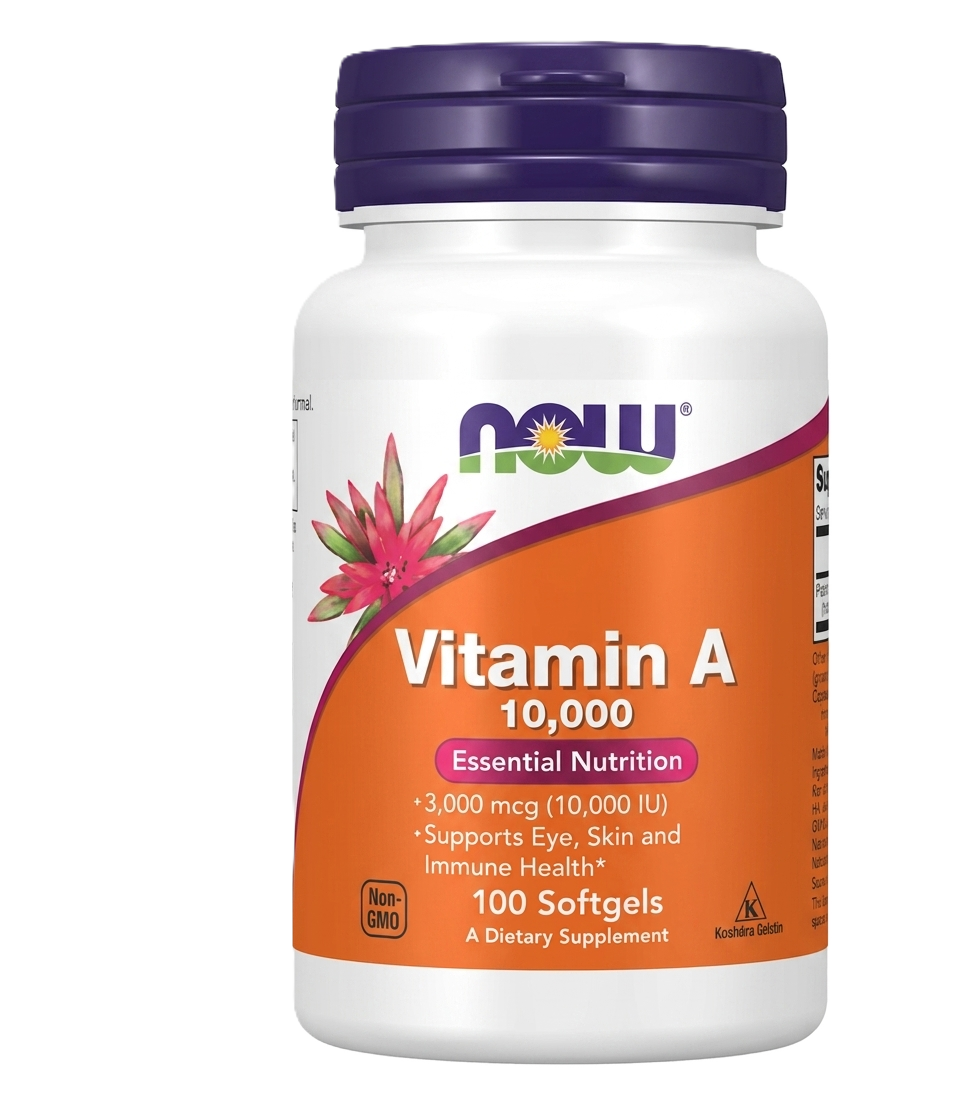
The product itself: NOW Vitamin A

Where to find it

Available at most major online retailers (iHerb, Amazon, and similar supplement stores).

Why I chose this brand

This is the specific brand I used. Good quality, a clean ingredient list (no seed oils or other questionable fillers).

What I took, not a protocol

In my case, the visible results came after taking two 10,000 IU softgels per day for about 8 weeks. That is my history, not dosing advice. Two softgels equals 20,000 IU/day of preformed vitamin A, which is above the adult upper limit, so I would not present it as something to copy casually. Read the safety section above first, and treat anything above ordinary intake as a doctor-guided decision.

Honesty

Not sponsored — I’m sharing it because it helped me.

NOW Vitamin A 10,000 IU softgel bottle — 100 softgels

Final thoughts on vitamin A

  1. i

    As you saw in the pictures, vitamin A was a massive milestone in improving the stomach symptoms I had been calling gastritis, my overall gut health, and my joint pain. But believe it or not, even after taking almost 300 pills, I was still not completely better. I continued to experience mild acid reflux and bloating, especially after eating or spending more than 30 minutes sitting at my desk. These flare-ups were always accompanied by dizziness—not as intense as it was in the very beginning, but it lingered.

  2. ii

    The same was true for my joint pain; even though the discomfort had improved immensely, it did not disappear entirely. If I pushed my workouts too hard, the aching would return.

  3. iii

    Finally, there were those strange stomach cramps triggered by certain head and neck movements—like tilting my head down slowly or keeping it perfectly straight while looking in the mirror. They were far less severe after the vitamin A regimen, but they persisted.

the last stimulus and the irritation I missed

  1. iv

    At first I thought I still had gastritis and that vitamin A had run its course, so I needed another supplement. Then, by chance, I found herring - a fatty fish rich in EPA and DHA omega-3s. It softened some lingering symptoms, but did not make them disappear. Later, my July 2026 endoscopy documented bile reflux into my stomach. I now suspect that ongoing irritation was the missing piece; that is my interpretation, not proof. The answer was not simply more supplements. I first needed to understand what was still irritating me.

The outcome so far

The recovery chapter leads to a clearer answer.

Part IV brings the three report periods together, shows the latest evidence, and honestly names what still needs attention.

Back to Part II Part IV: The Outcome So Far